
Language


More Language
One-stop comprehensive solution provider
Highway guardrails are everywhere. Drive along any expressway, bridge, or mountain road, and you'll see them lining the edges. Their job is simple but critical: when a vehicle drifts off course, the guardrail absorbs the impact and steers it back onto the road. It's a system that saves thousands of lives every year.
As road infrastructure expands globally and governments tighten safety regulations, the highway guardrail market is entering a period of rapid growth. According to industry analysis, the global market is projected to grow at a CAGR of 10.8% through 2031. Asia Pacific is expected to lead with a 35% market share, followed by North America at 28% and Europe at 20%.
But not all guardrails are the same. Different roads, different traffic conditions, and different budgets call for different solutions. Let's break down the main types.
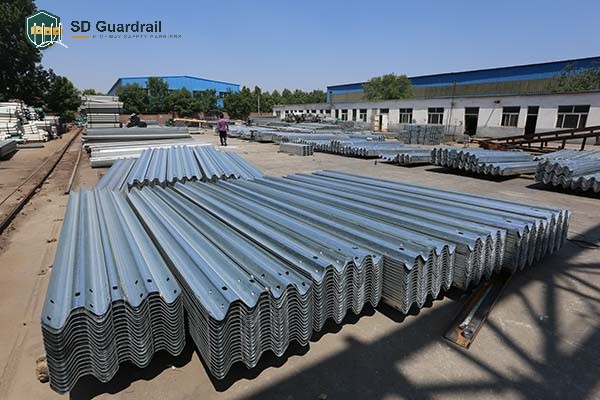
This is the workhorse of road safety. W Beam Guardrail and Thrie Beam Guardrail are the most widely used semi-rigid barriers worldwide.
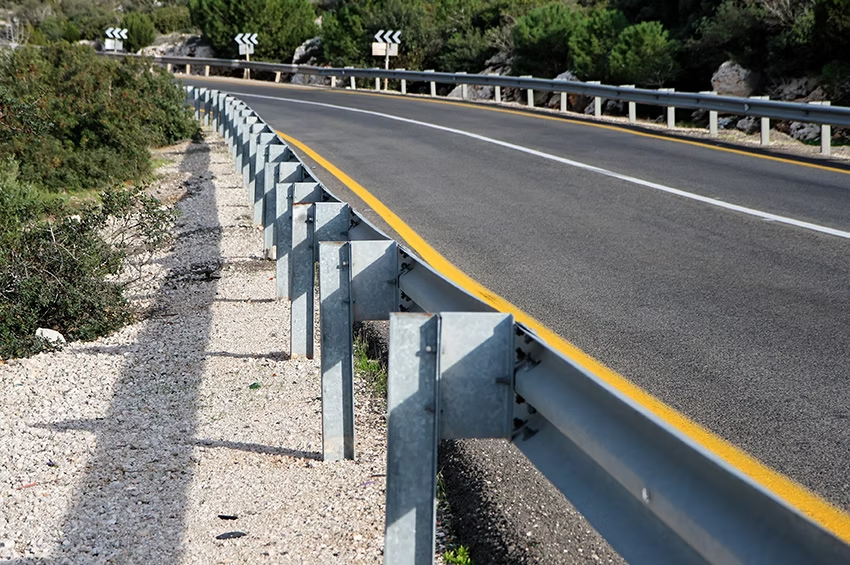
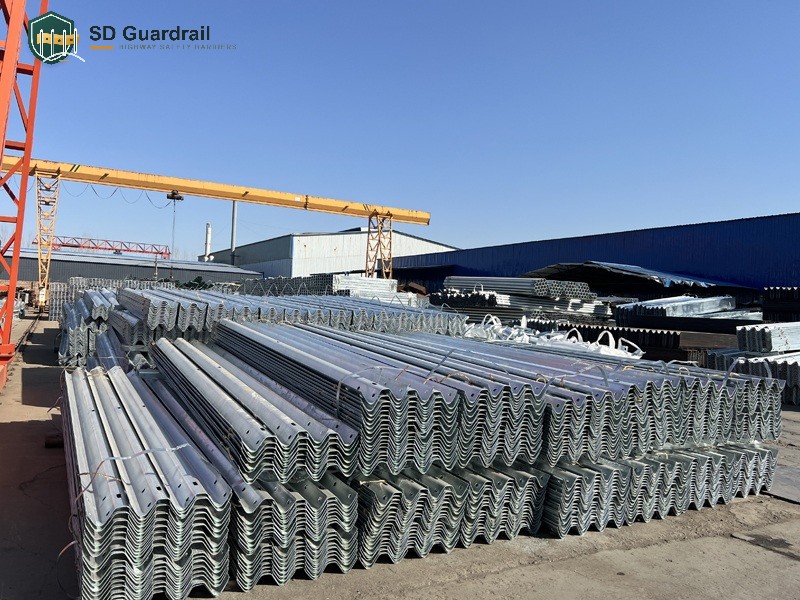
The W Beam gets its name from the W-shaped cross-section of the steel panel. It's simple, cost-effective, and does the job on most highways, rural roads, and ramps. When a vehicle hits it, the beam flexes, absorbs energy, and redirects the car.
Thrie Beam Guardrail is the beefier cousin. It has a three-wave design that offers higher durability and greater protection. It's typically used on bridges, high-speed expressways, and locations with heavy truck traffic where impact forces are greater. The trade-off? Heavier material, higher cost, and more complex installation.
Both types are made from high-strength steel with hot-dip galvanized coating to resist corrosion. In humid climates like Southeast Asia, this anti-rust treatment isn't optional—it's essential.
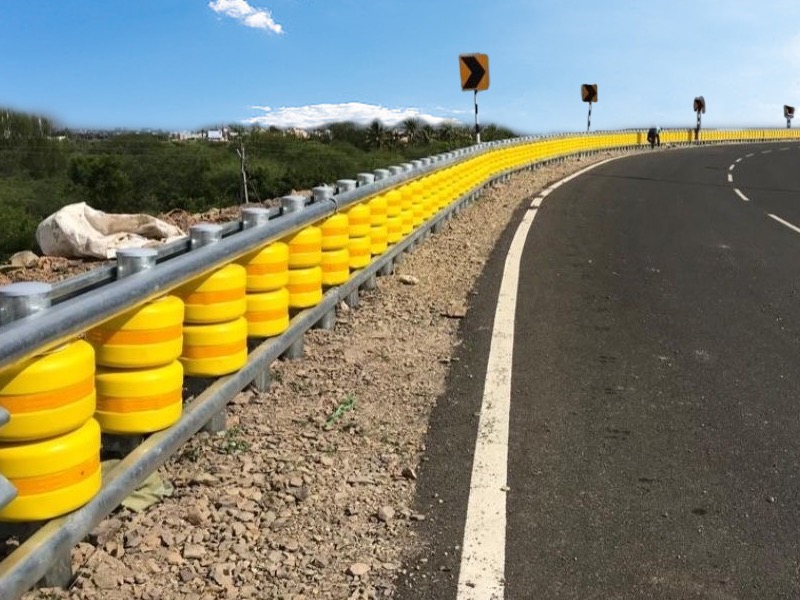
The Rolling Barrier is a relatively recent innovation, originating from South Korea. Instead of a rigid steel plate, it uses a series of PU/EVA rollers mounted on galvanized steel posts and beams.
Here's the clever part: when a vehicle hits the barrier, the rollers spin. The impact energy is converted into rotational energy, gradually slowing the vehicle and guiding it back toward the lane. It's a much gentler deceleration compared to traditional beam guardrails, which can cause severe injuries from abrupt stops.
The rollers are made of high-elasticity materials that stay flexible in both extreme heat and cold. They absorb shock effectively, and the reflective film on each roller improves nighttime visibility.
Maintenance is also simpler. If a section gets damaged, you only replace the broken rollers or brackets, not the entire span. For road authorities watching their budgets, this is a significant advantage.
Rolling barriers are gaining traction in Asia Pacific and are increasingly specified for mountain roads, curves, and areas with high motorcycle traffic—where traditional barriers can be particularly dangerous for two-wheelers.
Bridges present unique challenges. There's no shoulder, no runoff area—just a direct drop if a vehicle breaks through. That's why Bridge Guardrail has to meet stricter standards.
These systems are typically heavier and more rigid than standard highway beam guardrails. They're designed to contain vehicles at higher speeds and prevent them from going over the edge. Bridge guardrails often use Thrie Beam or specialized box-beam designs, with posts anchored directly into the bridge deck.
Corrosion resistance is also a bigger concern on bridges, especially over water or in coastal areas. Hot-dip galvanizing or even stainless steel components are common specifications.

Rope Guardrail takes a different approach. Instead of steel beams, it uses high-tensile steel ropes strung between posts. When a vehicle hits, the ropes stretch and absorb energy, then rebound to redirect the vehicle.
The main advantages? Rope guardrails are lighter, cheaper to install, and have a more open appearance that doesn't obstruct views. They're often used in median strips, scenic highways, and areas where aesthetics matter.
However, they're less effective at containing heavy vehicles at high speeds. Rope guardrails are best suited for lower-speed roads and locations where the risk of severe impact is moderate.
Several factors are pushing the guardrail market forward:
Government regulations. Road safety standards are getting stricter worldwide. Governments are mandating higher-performance barriers on new roads and requiring upgrades on existing ones.
Infrastructure spending. Developing countries are building roads at an unprecedented pace. China, India, and Southeast Asian nations are investing heavily in expressways, and every new kilometer needs guardrails.
Urbanization. More people in cities means more vehicles on the roads, more congestion, and more accidents. Guardrails are being installed not just on highways but also on urban expressways, ramps, and bridges.
Innovation. New materials and designs are emerging. Some manufacturers are experimenting with sensor-integrated guardrails that can monitor impacts and report damage in real-time. Others are developing lighter, stronger composites.
Asia Pacific is the largest and fastest-growing market, accounting for 35% of global demand. China alone holds about 5% of the global market, but its growth rate is among the highest. As road networks expand across the region, demand for both beam guardrails and rolling barriers is surging.
North America follows with 28% market share. The U.S. market is mature but continues to grow through replacement and upgrade projects.
Europe holds 20%, with a strong focus on safety innovation and sustainability.
If you're specifying guardrails for a project, the choice comes down to:
Road type: Expressway, bridge, rural road, or urban street?
Traffic composition: Mostly cars, or heavy trucks and motorcycles?
Speed limits: Higher speeds demand stronger systems.
Budget: W Beam is the most economical; Rolling Barrier costs more upfront but saves on maintenance.
Climate: Corrosion resistance is non-negotiable in coastal or tropical areas.
sdguardrail specializes in custom manufacturing of all major guardrail types—W Beam Guardrail, Thrie Beam Guardrail, Rolling Barrier, Bridge Guardrail, and Rope Guardrail. We work with clients to match the right system to the right road, whether it's a national highway in the Philippines or a mountain pass in Malaysia.
The highway guardrail market is growing—and it's growing because road safety matters. Governments know it, engineers know it, and the numbers prove it. With a projected CAGR of 10.8% through 2031, this is a sector that rewards smart choices.
Whether you're upgrading an existing road or building a new one, the guardrail you choose has real consequences. It's not just about meeting specifications—it's about protecting lives, reducing maintenance costs, and building infrastructure that lasts.
Ready to discuss your project? Reach out to sdguardrail for a consultation. We'll help you select the right system for your roads, your budget, and your safety goals.
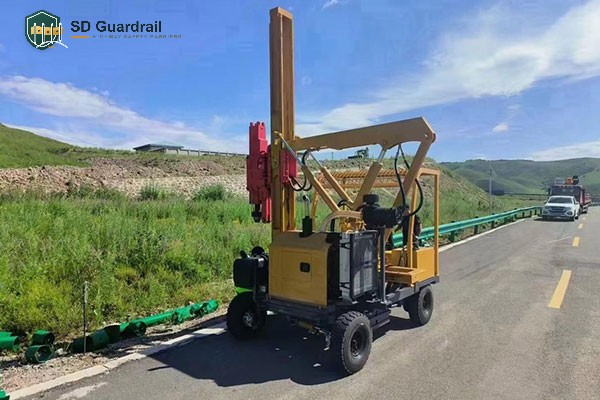
A short, practical guide on how to install W Beam Guardrail, from site setting-out and post driving to rail alignment, bolts, terminals, and final inspection.
Malaysia's highway infrastructure is undergoing a significant transformation. With road safety becoming an increasingly urgent priority across the nation, t···
In highway safety infrastructure, the transition from standard W-beam guardrail to thrie-beam guardrail represents a critical connection point that ensures cont···